
Knowledge base · Use
Will I actually use my spa?
Whether you use a spa regularly depends partly on location, access and your daily schedule. This article helps you weigh those points before you buy, with explanation from behavioural research.
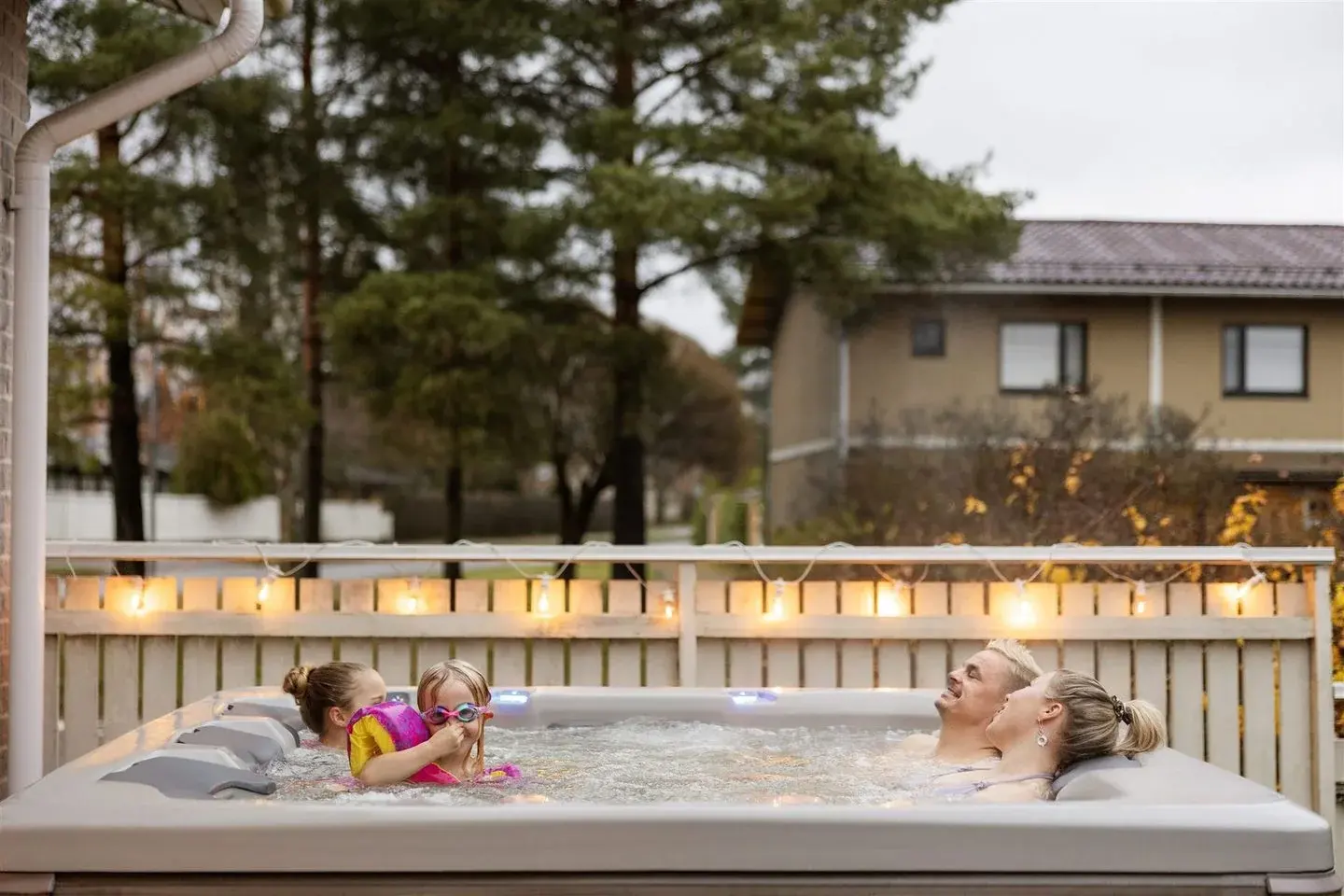 Loading photo
The answer
When would you use the spa?
A fixed moment and a short route do more than good intentions.
Anyone considering a hot tub and wondering whether they will really use it is asking a good question. It depends mostly on where the spa will stand, at which moment of the day it fits your rhythm, and how many steps there are between the sofa and the water.
That sounds simple, and it is. A spa twenty paces from the back door, always at temperature, with its fixed moment on Tuesday evening after dinner, gets used. A spa at the far end of the garden without a fixed moment waits for a fine evening, and in November that evening does not come by itself.
The research below is not about spas. It is about gyms and about daily habits, and that is exactly why it is useful: it shows how people judge themselves and what a new habit asks of them. From that follows a short list, and we take that list into the conversation.
The research
What people expect of themselves, and what they do
Three studies with name and year. Not spa research, but behavioural research.
There is no study that follows spa owners for years. What does exist is solid research into how well people predict their own future behaviour, how quickly a resolution fades, and how long a habit needs before it runs by itself.
What we take from this: people overestimate how often they will do something new, the first weeks are decisive, and a habit needs a good two months. Anyone buying a spa therefore does well not to leave those first two months to chance. And you have one advantage a gym does not: the spa stands in your own garden, and it is already warm.
Expectation versus behaviour
People overestimate themselves
Two economists followed 7,752 members of three American gyms for three years, counted at the entry gates: 4.17 visits a month on average. They separately asked 48 gym members how many visits they expected to make in the coming month. The answer averaged 9.5. Between the last visit and the cancellation, on average another 2.31 months of fees went on being paid. DellaVigna and Malmendier, American Economic Review, 2006.
The first months
The first months are the hardest
At a fitness centre in Rio de Janeiro, 5,240 new members were followed for a year, or for less if they cancelled sooner. 63 per cent stopped before the third month, and fewer than 4 per cent stayed continuously active for twelve months. With a spa or swim spa in your own garden there is no travel time: if you want to exercise in the morning, you only have to step out of the back door. Sperandei et al., Journal of Science and Medicine in Sport, 2016.
How long a habit takes
A habit takes over two months
96 volunteers chose something to do daily at the same moment for twelve weeks: eating, drinking or exercise, for example after breakfast. Automaticity rose and then levelled off. Of the participants whose curve could be modelled, half reached that point within 66 days, the fastest after 18 and the slowest after 254 days. Missing a single day did the process little harm. Lally et al., European Journal of Social Psychology, 2010.
What makes the difference
Location, access and time of use
Four things you settle before you buy, not after.
Lally’s habit research comes down to one thing: the same action, at the same moment, in the same setting. Everything that stands in between is friction. With a spa that friction can be kept small, and it starts with the location.
- The spa is always at temperature. A spa keeps its water warm day and night under the cover. There is nothing to preheat or plan: cover off, step in. Compare that with a day at a spa resort, with the drive, the entry fee and the journey home in the evening.
- Count the steps from the back door. The shorter the route, the more often you go. In summer it hardly matters. In January every metre counts. That is why the location is the first thing we look at, before the model. Better close by and visible from the kitchen than beautiful at the far end of the garden.
- Choose a fixed moment. After dinner, or Saturday morning with the coffee. Which moment does not matter, as long as it stays the same. That is exactly what Lally’s participants did: the same action after the same cue, until they no longer thought about it.
- Agree who switches it on. Cover open, lights on, jets running. In most households one person takes the initiative. Agree beforehand who that is, and the cover comes off on a grey Tuesday too.
Points to consider
Some people use it less than they expected
What makes the difference is what we discuss before you buy.
There are owners who use their spa less than they thought they would when they bought it. Usually the difference lies in the three things above: the location was too far, there was no fixed moment, or nobody felt responsible for the cover.
Before purchase, we discuss when you want to use the spa and whether the planned location is practical. Bring any doubts to the consultation.
If you are in doubt
Come and talk first. A first showroom visit of forty-five minutes to an hour is quite normal. Doubt that is on the table beforehand is exactly what that conversation is for.
In practice
This is how the spa becomes part of your week
What we arrange along the way, from location to water.
In the consultation, in our showroom in ’s-Graveland or using your photos and videos, it starts with the location and with your week. The location and the moment weigh more heavily there than the number of jets. Only then comes the question of which spa fits. We make that choice together. This article does not pick a model.
Maintenance should never become a reason to leave the cover on either. We register every installation at placement, with serial number and water reading, and we keep a water and maintenance file for each client. If you call with a question about the water, we have your file at hand.
Decide beforehand when you want to use the spa and what that requires in practice. A fixed place in your week can help. How quickly something becomes a habit differs from person to person. Regular use is no guarantee.
Further reading
Related articles
Sauna, warm bath and sleep: what research shows
The fixed moment after dinner has one more reason: what happens to your body temperature after a warm bath. With the studies included.
Buying a hot tub: what should you look for?
What to look for when buying a spa.
See our spas
What stands in the showroom in ’s-Graveland. Which model suits your location and your week is what we discuss in the conversation.
Sources
Sources and author
Every figure on this page has been checked against the original publication.

Talk first
Would a spa fit your daily routine?
We discuss the location and how you will use the spa before choosing a model. Bring photos and measurements to your showroom consultation.