
Knowledge base · Research
Warm baths and the heart: the Japanese study
It has not been proven, and we would rather say so straight away. What does exist is the first large study to follow people for years on warm bathing and the heart, and it points one way. Japanese researchers asked 30,076 people how often they took a bath and then followed them for nineteen years. Those who bathed almost daily fared better on heart and blood vessels. Here is what they found, and where the evidence stops.
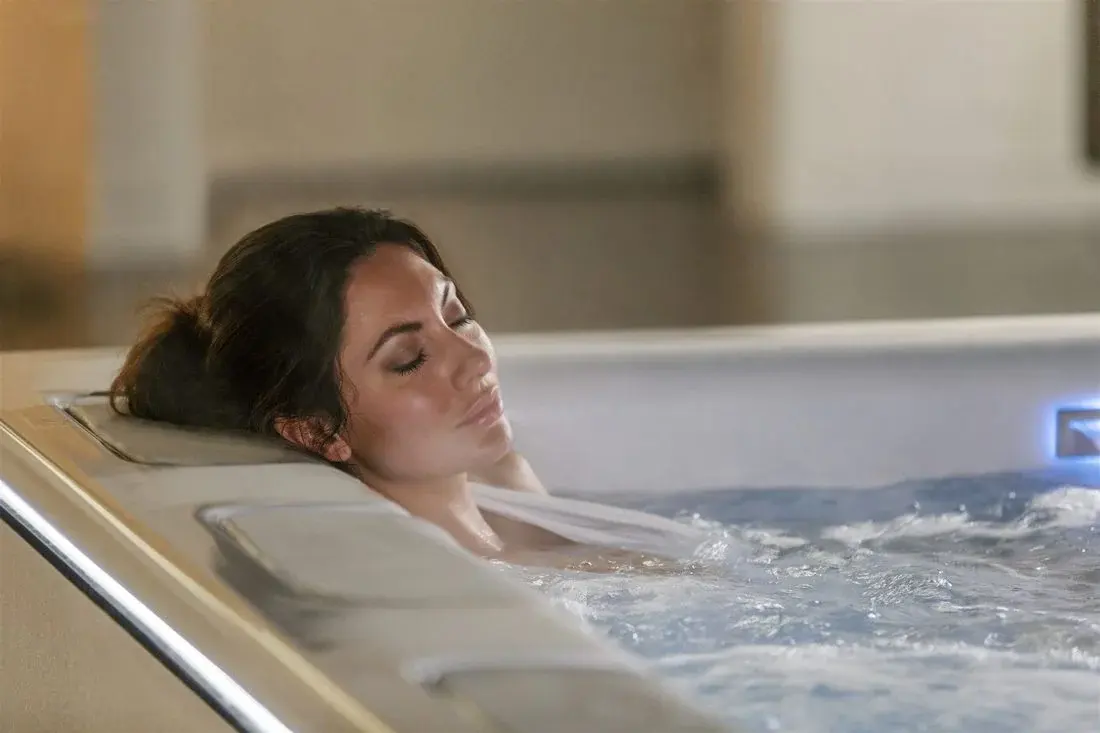 Loading photo
The short answer
Those who bathed almost daily fared better
28% less cardiovascular disease, 26% fewer strokes. Observational, and that word does the work here.
In 2020 the journal Heart published the first large study to follow people for years on warm bathing and the heart. Those who took a bath almost every day developed cardiovascular disease 28 per cent less often over the following nineteen years than those who bathed at most twice a week. For stroke the difference was 26 per cent.
That is not proof that the bath is the cause. The study shows what occurs together, not what causes what. Even so, for anyone considering a spa this is the study to know.
It concerns warm water, not a hot sauna. It concerns men and women aged 40 to 59. And it concerns thirty thousand people, thirteen times as many as the Finnish sauna study.
The study
Who was followed, and for how long
30,076 Japanese adults aged 40 to 59, from 1990 to the end of 2009.
The study is part of a large Japanese population study on lifestyle and disease. At the start, in 1990, participants completed a questionnaire on their health and habits. One question was about bathing: how many times a week do you take a bath, and is the water lukewarm, warm or hot.
With that, the researchers divided the participants into three groups: at most twice a week, three to four times a week, and almost daily or daily. Everyone was aged 40 to 59 at the start and had no cardiovascular disease and no cancer. If you are older or younger than that group, this study says nothing about your age group. From then until the end of 2009, the researchers recorded who developed cardiovascular disease.
That produced 2,097 cases: 328 cases of coronary heart disease, including 275 heart attacks and 53 sudden cardiac deaths, and 1,769 strokes. The researchers adjusted for the known cardiovascular risk factors and for a number of dietary habits. What remained, Ukai and colleagues published in Heart in 2020.
The findings
The findings after nineteen years
Bathing almost daily, set against at most twice a week.
The differences as the researchers published them, after adjustment for the factors mentioned. In brackets the hazard ratio: the risk of the daily bathers as a fraction of that of the group bathing at most twice a week.
All cardiovascular disease combined
28% lower (HR 0.72)
The firmest figure in the study, because it rests on all 2,097 cases. The confidence interval runs from 0.62 to 0.84, so even at the cautious end sixteen per cent remains. Heart, 2020.
Coronary heart disease
35% lower (HR 0.65)
Heart attacks and sudden cardiac deaths combined, 328 cases. The margin is wide, from 0.45 to 0.94, and the trend across the three groups fell just short of statistical significance. This figure deserves a pinch of salt.
Stroke
26% lower (HR 0.74)
All strokes combined, 1,769 cases, with an interval of 0.62 to 0.87. For cerebral infarction on its own the difference was 23 per cent (HR 0.77), but there the trend across the three groups did not hold up statistically.
Intracerebral haemorrhage
46% lower (HR 0.54)
The largest difference was in intracerebral haemorrhage, 510 cases, interval 0.40 to 0.73. For subarachnoid haemorrhage, a different type, the researchers found no association. Nor for sudden cardiac death.
The small print
What this research does not say
Four questions worth asking of any health statistic.
We sell spas, so you may expect us to be happy to quote this study. That is exactly why its limits belong here as clearly as the percentages.
Does this prove a warm bath protects the heart?
No. It is observational research: those who bathed almost daily turned out to fare better, which is not the same as the bath making the difference. Bathing frequency was asked once, at the start in 1990, and not tracked afterwards. And it could work the other way round: people who already felt unwell may have bathed less often.
Is a spa the same as the bath in this study?
No, and we would rather write that down ourselves than have you read it elsewhere. The Japanese bath is hot and deep: participants sat in water up to their shoulders. In a spa you also sit up to your shoulders, but the water moves and you choose the temperature yourself. What remains is what the study itself measured: participants were classified by how often they bathed, and that is the association the researchers published. And regularity is easiest to achieve at home.
How does this compare with the Finnish sauna research?
The Finnish study in JAMA Internal Medicine, 2015, followed 2,315 men and found a lower risk of sudden cardiac death among those using the sauna four to seven times a week. The Japanese study is thirteen times larger, includes women, and found no association at all for sudden cardiac death. Two countries, two products, the same direction on most outcomes. And in both cases it remains observational.
Does this say anything about blood pressure, cholesterol or losing weight?
No. The study counts who developed cardiovascular disease, not what happened in the blood. You will not find promises about cholesterol, blood sugar or detoxing here, nor anywhere else on this site. What you may take from it: the pattern the researchers saw was almost daily. Not now and then.
What you can do with it
From a Japanese bath to your own garden
Four things the research itself points to.
We give no health advice. Your doctor does. What we can do is write down what was measured, so you can see for yourself what a spa at home asks of you in practice. In our showroom in ’s-Graveland the spas stand without water. How a spa works is something we discuss in the consultation.
- Regularity is what the research is about. The group that fared better went almost every day. A spa twenty steps from your back door, always at temperature, sustains that pattern more easily than an outing.
- Hotter is not required. The study classified participants by how often they bathed, not by how hot the water was. It says nothing about temperature. A temperature at which you can sit calmly for twenty minutes is therefore no compromise.
- One to two hours before bedtime. Different research, same bath. A meta-analysis in Sleep Medicine Reviews, 2019, found that ten minutes in water of 40 to 42.5 degrees Celsius, one to two hours before bedtime, shortens the time it takes to fall asleep. It concerns falling asleep, not staying asleep.
- Stand up slowly, and drink water afterwards. In warm water the blood vessels in the skin open wide. Anyone who steps out of the bath in one movement can feel light-headed. Sit on the edge for a moment before you stand.
Safety
When to call your doctor first
Heart complaints, blood pressure medication, pregnancy or doubt: talk it through first.
Warm water is work for the heart, which is precisely why some people should discuss it first. Unstable angina pectoris, a recent heart attack and severe narrowing of the aortic valve are listed in the medical literature as contraindications for the sauna (Hannuksela and Ellahham, American Journal of Medicine, 2001), and there is no reason to be less careful with hot water. If you take blood pressure medication, your blood pressure can drop too far when you stand up afterwards (Kukkonen-Harjula and Kauppinen, 2006). In those cases, consult your doctor or cardiologist before you begin.
On bathing during pregnancy the sources disagree. Discuss it with your midwife or doctor. A few plain rules apply to everyone. No alcohol before or in the bath. Not too hot, and out as soon as you feel light-headed. Never leave children alone in a spa.
Further reading
Related articles
Sauna and the heart: the Finnish research
The other large cohort: 2,315 Finnish men, followed for over twenty years. Same direction, different product, different caveats.
Sauna and sleep
Why the cooling down after warm water helps you fall asleep, and why that evidence concerns bathing rather than sauna.
Will I actually use my spa?
Almost daily was the pattern in Japan. What behavioural research says about keeping it up, and what makes the difference at home.
Accountability
Sources and author
Every figure on this page was checked against the original publication.

See for yourself
See the spas in our showroom
Compare seating layouts and dimensions from Bullfrog and the Sunspa collections in ’s-Graveland. We also discuss installation. Consult your doctor for personal health advice.