
Knowledge base · Energy
What does a spa cost to run?
Electricity costs depend on insulation, the cover, water temperature and use. Calculate your spa’s cost with your smart meter and electricity tariff.
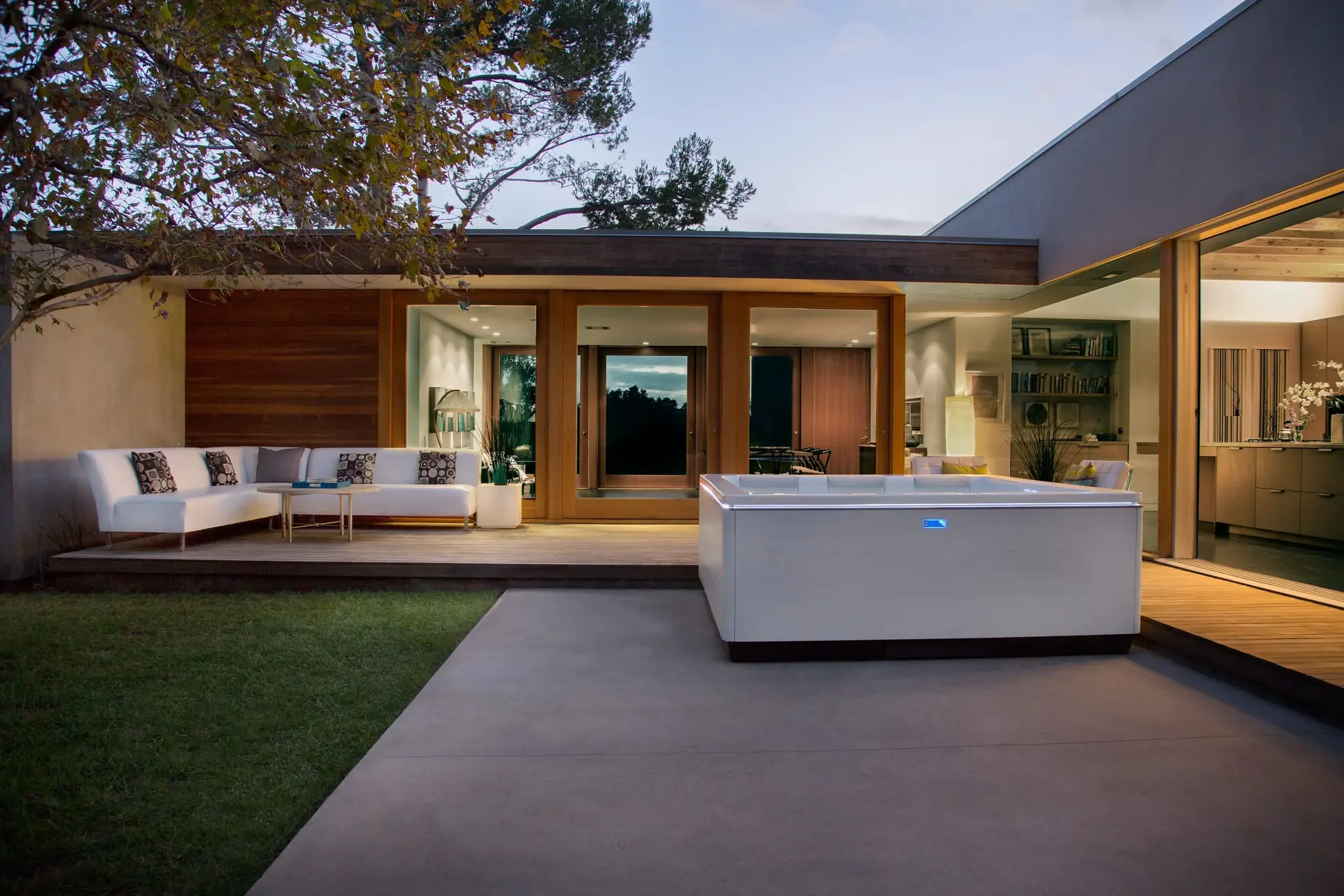 SUNSPA ’T GOOI Wellness at home.
First, the basics
Where does the electricity go?
Almost all the electricity goes on keeping the water warm, not on the jets.
A spa continually loses heat to the air and ground. Its heater replaces that heat.
Even when the spa is unused, heating starts as the water cools. Pumps and jets run during use and filtration; maintaining temperature accounts for most annual consumption.
That is why the insulation of the shell, the quality of the cover and the difference between your water temperature and the outside air decide most of your consumption. Not the number of jets, not the badge on the rim. A well insulated spa with a sealing cover in a sheltered corner of the garden costs consistently less than a poorly insulated tub out in the open.
The six dials
Six things that set your consumption
In order of impact, from large to small.
The first two are the hardest to change after purchase, and they matter most.
Insulation
The shell around the water
A shell that is thickly insulated all round keeps in the heat that would otherwise leak out through the walls and floor. This is the biggest and most underrated factor, and it cannot be changed after purchase. So always ask how a spa is insulated, not just how many jets it has.
Cover
The lid that works 24 hours
Water loses most of its heat at the surface. A well sealing, thick cover is your most important saving, every single day. A worn or warped cover lets heat and vapour escape and drives up consumption without you noticing.
Temperature
Every degree counts
The greater the gap between the water and the outside air, the faster the heat escapes. A few degrees lower between sessions makes a noticeable difference, because the heater then has a smaller gap to bridge.
Heating
Element or heat pump
A heating element turns electricity into heat one to one. An inverter heat pump moves heat out of the outside air and so delivers several times more heat per kWh. For the same heat loss, the type of heating decides how much electricity that costs.
Use
How often the cover opens
Every time you open and use the spa, heat escapes that the heater has to replace. Bathing more often and longer does cost more, but the difference is smaller than people think: keeping the water at temperature counts for more than the sessions themselves.
Season
Winter is the test
In winter the gap with the outside air is largest, so the heater works hardest. A spa that costs little in summer can ask noticeably more in January. A sheltered spot and a good cover soften that difference.
The maths
Work out a ballpark yourself
Measure for a week on your own meter, or use kW × hours × € 0.27.
If you want to know what your spa costs, do not start from a table in a brochure; start from your own situation. There are two ways to do that: measuring or estimating.
The cleanest way is to measure. Read your smart meter for a week at a fixed time, divide the difference by seven and you have a daily use that fits your tub, your cover and that week’s weather. Multiply by thirty for a month. That way you know, instead of guessing.
Quick estimate
If you know the heater’s power rating (in kW) and how many hours a day it runs (watch the meter for a day to see), estimate it like this:
kW × hours per day × 30 × € 0.27 = cost per month€ 0.27 per kWh is a representative Dutch electricity tariff for 2026 (source: Milieu Centraal). Your own rate is on your annual statement. Use a few running hours in summer and more in winter, and you have an honest lower and upper bound.
The biggest choice
Heat pump or element?
A heat pump makes roughly three to five kWh of heat per kWh of power; an element one.
This is the choice that matters most for your bill. A heating element is simple and cheap to buy: it turns every kWh of electricity into exactly one kWh of heat. An inverter heat pump does something clever: it draws heat from the outside air and passes it to the water. As a general guide, such a heat pump makes roughly three to five kWh of heat from one kWh of electricity (source: Milieu Centraal), where an element stays one to one.
In practice that means a far lower consumption for the same warm water, especially if you keep the spa at temperature all year. A heat pump costs more to buy and works most efficiently when it is not too cold outside. If you use the spa year round, that lower consumption counts the most. What is wisest in your situation, we work out with you in the showroom.
Myths
Three stubborn myths
Three stories that get repeated, and what is actually true.
‘A spa is a bottomless drain on electricity.’
That picture comes from the era of poorly insulated tubs. A modern, well insulated spa with a sealing cover holds its heat far better. It is a monthly cost you take on knowingly, not a bottomless pit, and you have a lot of influence over it yourself.
‘In winter you are better off switching it off.’
Usually not. Reheating a spa that has cooled down costs a big spike of electricity, and in frost, leaving it empty or cold risks the pipes freezing. Keeping it at temperature under a good cover is generally cheaper and safer than heating it up again and again.
‘More jets means more electricity.’
The jets only run briefly, during a session. They set the comfort, not your yearly use; that sits in keeping the water at temperature day and night. So choose on insulation and cover, not on the number of jets.
In practice
How to keep consumption low
The biggest gains come at purchase and from the cover.
- Choose on insulation and cover. At purchase you gain the most here, and it cannot be changed later.
- Replace a worn cover in time. A warped or waterlogged cover is often the quiet cause of a high bill.
- Turn the temperature down when you will not bathe for a while. It does not need to be off; just below your bathing temperature already helps, because the heater then works less hard.
- Heat during the day on your own solar power. On 1 January 2027, net metering ends; electricity you use yourself is then worth more than electricity you feed back. A spa can heat up at the moment your panels are generating.
Solar and net metering
Solar panels and net metering
After 2027, using your own power beats feeding it back.
If you have solar panels, your spa is a handy place to use electricity during the day that you would otherwise feed back. Set the heater to run mainly when the sun shines, for example with a timer or a smart plug.
That matters more each year, because the Dutch net metering scheme (salderingsregeling) ends on 1 January 2027 (passed by the Senate, source: the Dutch government). You will no longer be able to offset the electricity you feed back against what you draw. A feed-in payment remains, but it is lower. Electricity you use yourself at the moment your panels generate it is worth the most from then on. A spa that heats during the day fits that well.
Further reading
Three articles that build on this one
Heating a hot tub with a heat pump
How much a heat pump saves compared with the heating element, and when that gain turns out smaller than expected. With an explanation of a dynamic electricity contract.
Installing a hot tub: power, base, crane
Which circuit the meter cupboard needs, what the base has to carry and how the spa reaches its spot. You arrange this before delivery is planned.
Cloudy hot tub water: what actually helps
What causes cloudy water and foam, and in which order you measure before adding anything. It saves filter cleans and products you did not need.
About this article
Sources and author
Every claim here is sourced or flagged as an estimate.

Personal advice
The maths for your situation.
Come by the showroom or call us. We turn it into an honest calculation, based on your use and your own electricity rate. One page, no brochure.